
Follow Us

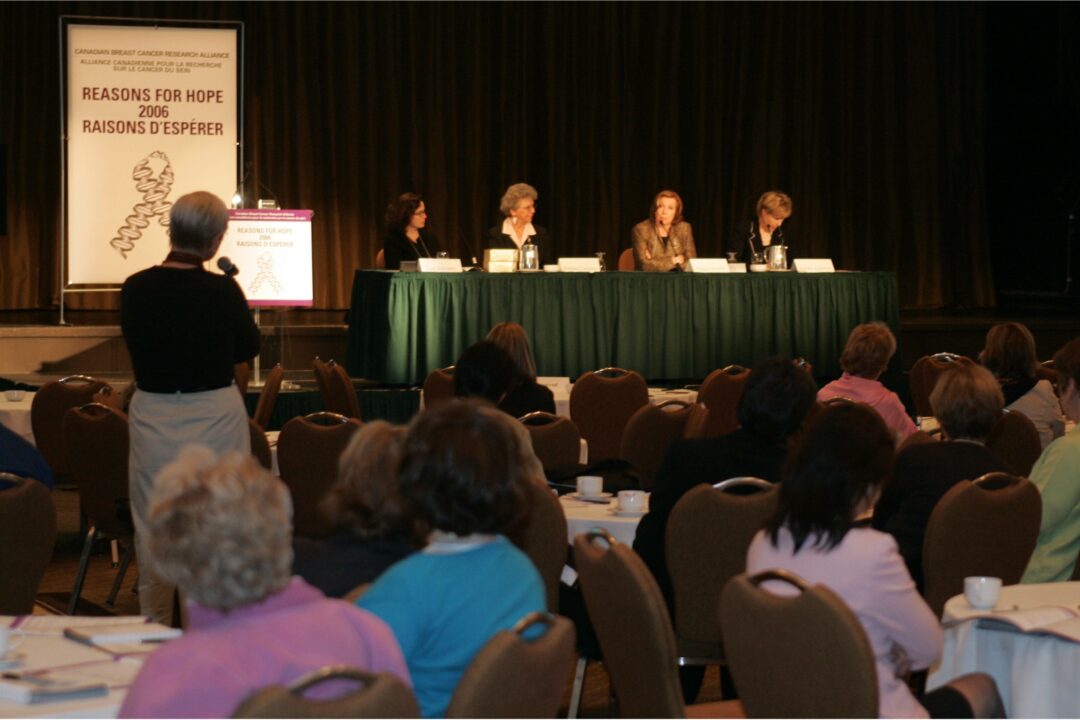
Canadian Breast Cancer Research Alliance Conference Case Study
Some conferences are large. Others are complex. The Canadian Breast Cancer Research Alliance Reasons for Hope Conference was both. With 400 delegates, 150 abstract submissions, a planning committee spread across Canada, and an audience made up of researchers, medical professionals, and survivors, this was an event where precision was not optional. ELP became the operational backbone that turned fragmentation into cohesion and delivered a three-day conference with confidence, care, and zero visible gaps.
This was not a straightforward conference build. The event involved multiple stakeholder groups, each with different priorities, expectations, and sensitivities, and the committee overseeing the work was geographically dispersed across the country. Communication was starting to break down, details were becoming siloed, and the risk was not just inefficiency, but a delegate and presenter experience that could easily feel disjointed. In a setting shaped by science, medicine, and personal stories of survival, trust had to be earned through precision.
The conference required seamless management of 400 delegates traveling from across Canada, alongside 150 abstract submissions that had to move through review, selection, and final presentation planning. Every presenter brought specific AV, hospitality, and poster requirements, while the broader event also demanded registration management, food and beverage coordination, travel, accommodations, and full onsite execution over three intensive days. This was the kind of program where operational weakness would show immediately, so the structure behind the scenes had to be exceptionally strong.
ELP became the nerve center for the entire conference. The team built communication templates that quickly became a lifeline for the committee, helping everyone stay aligned no matter where they were located or which part of the program they owned. An online registration system tracked delegate details, travel, accommodations, abstract submissions, and session preferences in real time, while the presenter workflow managed 150 abstracts from selection through to direct coordination of AV, poster, and hospitality requirements.
At the Queen Elizabeth Hotel, ELP managed the full onsite ecosystem: registration, food and beverage, travel and accommodation logistics, printed materials, gift bags, lanyards, binders, and session flow across plenary, concurrent, and poster presentation formats. The experience felt seamless because every operational thread had already been organized, pressure-tested, and connected back to a central system. Researchers could focus on presenting, medical professionals could focus on learning and connection, and survivors could move through the experience feeling welcomed and cared for.
The result was flawless execution for 400 delegates across three days, with no visible technical or logistical gaps. The planning committee moved from fragmented communication to a more unified working rhythm, and the systems ELP introduced became part of their standard operating approach. More importantly, the conference proved that when the stakes are high and the audience is deeply invested, operational excellence is not just support work. It is what makes trust possible.
Multi-stakeholder conferences expose every weakness in planning, communication, and execution. This project demonstrates ELP’s strength in risk management, complex orchestration, emotionally intelligent leadership, and strategic communication under pressure. For medical conferences, research summits, and other high-stakes knowledge events, ELP does not simply execute logistics. ELP becomes the structure that allows complexity to perform calmly.
Can ELP manage fast-turnaround launches?
Yes. In this case, ELP developed a branded stage concept that could be built in less than four hours while managing the wider production, safety, and permitting needs of a large public launch.
What makes ELP different from other event production partners?
ELP combines production expertise with thoughtful planning and acts as an extension of the client team. In this case, success depended on both technical execution and sound judgment under pressure.
What did ELP manage beyond registration?
In addition to registration, ELP coordinated abstract administration, presenter communication, AV and poster requirements, travel, accommodations, food and beverage, printed materials, and full onsite execution.
Why is this relevant for medical and research conferences?
It shows how strong operational systems and thoughtful leadership can protect the integrity of high-stakes content while also supporting attendees who need a professional and caring environment.
What outcome did the planning committee see?
The committee experienced a more cohesive planning process, adopted ELP’s communication tools as an internal standard, and delivered a conference that ran smoothly from start to finish.
- TIMBER MART National Buying Show
- Senior Management Group Conference
- Hybrid Event Production for Financial Services
- Virtual Incentive Event for a Financial Services Organization
- Krispy Kreme Canadian Store Opening Events
- Virtual Dealer Product Launch for an Automotive Brand
- A Global Consumer Electronics Brand Pop-Up Concert Launch in Toronto
- Mary Kay Cosmetics Canada