

Follow Us

Designing for Choice: Breakouts, Lounges, and Networking
A strong conference is not built on the mainstage alone. The most effective programs give attendees choices that let them learn, connect, and move through the day in a way that feels useful and human. When breakouts, lounges, and networking spaces are designed well, the entire experience feels more engaging and intentional.
A single-room agenda can work when the audience is small and the message is simple. But once an event grows, one-size-fits-all programming starts to break down. Different leaders need different levels of detail, different formats, and different ways to absorb information.
In the evolution of a long-running enterprise leadership conference, the format eventually had to become more layered because the audience needed more than one shared session. As the program grew, the challenge was no longer just delivering content. It was designing for different ways people participate.
That is why choice matters. When attendees can decide how they spend their time, they are more likely to stay engaged. They are also more likely to feel that the event respects their role, their time, and their priorities.
Breakout sessions are one of the clearest ways to make a conference more useful. They allow the mainstage to stay focused on the big picture while smaller sessions go deeper into specific topics, business lines, or leadership themes.
Over time, the program moved from a single plenary-style format to a model that included leadership sessions, multiple rooms, and more flexibility in how people moved through the day. That change mattered because it gave the audience more depth than the mainstage alone could provide.
Breakouts also create a better learning environment. Some attendees want broad strategic updates, while others want practical detail, peer discussion, or role-specific takeaways. A well-designed breakout structure can serve all of those needs without forcing everyone into the same experience.
Just as important, breakouts make the event feel more personalized. Attendees are not just consuming content. They are making decisions about what matters most to them.
Some of the best event moments happen outside the formal session rooms. Informal learning spaces give attendees a chance to pause, reflect, and continue the conversation in a less structured setting.
These spaces need to evolve alongside the content. Speaker areas, conversation zones, and nearby gathering spots help extend the value of the mainstage and breakouts. Instead of ending when the session ended, the conversation continues in the space around it.
That matters because learning is not always linear. People often need a few minutes to process what they heard, compare notes with colleagues, or ask a follow-up question. Informal spaces make that possible.
These moments also create social energy. When attendees are moving naturally between sessions and conversations, the event feels less rigid and more alive. That flexibility helps the whole conference feel more human.
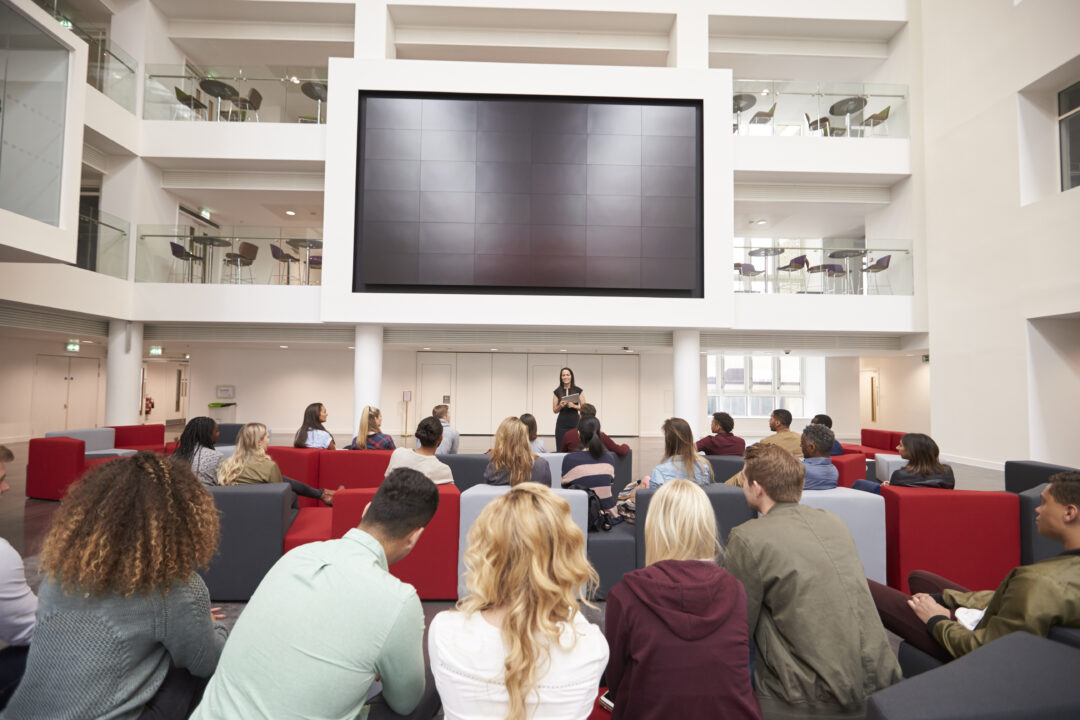
Lounges are often treated as background space, but they play a major role in how a conference feels. A good lounge is not just somewhere to sit. It is a place where people can connect, regroup, and discover what comes next.
Lounge-style environments became part of the broader attendee experience as the program matured. These areas helped anchor the event between mainstage content, meals, and breakouts. They gave attendees a place to land, which is especially important in large programs where people are constantly moving.
Lounges matter because they shape the rhythm of the day. They reduce friction. They create breathing room. And they give attendees a sense that the event was designed with real movement in mind, not just a schedule on paper.
They also support networking in a much more natural way. Instead of forcing connection through a formal exercise, they make it easier for people to run into each other, start a conversation, and keep moving.
The best conferences are designed as journeys. That means every touchpoint, from arrival to final session, should feel intentional. It is not enough to have a strong agenda if the attendee experience feels disconnected.
The event became more effective as it started thinking beyond the stage. Breakouts, lounges, networking areas, and movement between spaces all became part of a larger design strategy. The event was no longer just a sequence of sessions. It was an experience that guided people through a full day with purpose.
That is the real lesson for event leaders. Choice does not weaken the program. It strengthens it. It allows people to engage on their own terms while still staying connected to the larger message. It also gives the event more texture, more energy, and more opportunities for people to connect with each other.
When the journey is designed well, the conference feels smoother, smarter, and more memorable. And that is what makes attendees leave feeling like the event was built for them, not just delivered to them.
FAQ
What is the role of breakout sessions in a conference?
Breakout sessions let attendees go deeper into specific topics, business lines, or leadership themes while the mainstage covers the big picture.
Why are lounges important at conferences?
Lounges give attendees a place to connect, regroup, and move through the day more comfortably.
How do informal spaces improve attendee engagement?
They give people time to reflect, compare notes, and continue conversations outside the formal session rooms.
Why does attendee choice matter?
Choice helps attendees feel more engaged, respected, and connected to the content that matters most to them.
How does ELP approach conference journey design?
ELP designs the experience around movement, flexibility, and connection so the full day feels intentional from arrival to exit.